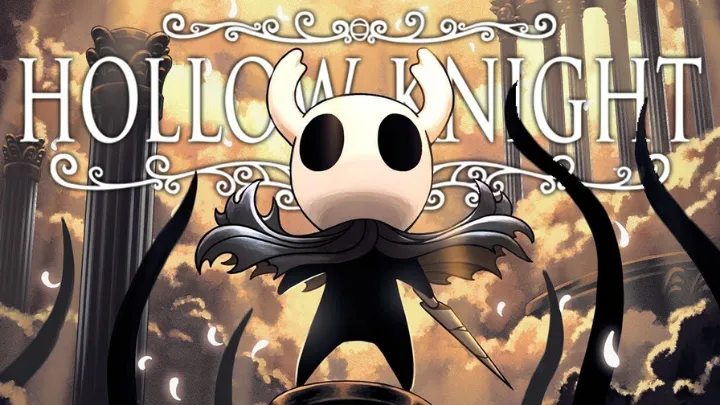





The indie gaming landscape was forever altered in 2017 with the release of Hollow Knight. Team Cherry, a tiny studio from Adelaide, Australia, managed to craft a Metroidvania so dense, atmospheric, and mechanically precise that it redefined the genre. However, the game’s greatest legacy isn't just its success, but the agonizing silence that has followed the announcement of its sequel, Hollow Knight: Silksong. What began as a simple Kickstarter stretch goal—a second playable character—morphed into a standalone epic that has now spent over half a decade in development.
This article explores the specific crisis of "Infinite Expansion" within Team Cherry’s development cycle. By analyzing the transition from a DLC project to a full-scale sequel, we can dissect the mechanical and psychological hurdles that arise when a small team attempts to outdo a masterpiece. We will look at how the evolution of Hornet’s movement, the world-building of Pharloom, and the weight of community expectation have created a unique developmental bottleneck.
The Genesis of Hornet: From Expansion to Independent Epic
When Hollow Knight was still a fledgling Kickstarter project, one of the most celebrated milestones was the promise of a second playable character: Hornet. Initially, the vision was modest. Hornet would navigate the existing world of Hallownest with a different move set, providing a fresh perspective on a familiar map. This "Playable Hornet" DLC was meant to be a victory lap for the developers and a thank-you to the backers who funded their dream.
However, as Team Cherry began prototyping Hornet’s gameplay, they encountered a fundamental mechanical friction. Hornet was faster, taller, and more acrobatic than the Knight. Hallownest’s tunnels, designed for the Knight’s stubby stature and grounded movement, felt claustrophobic and restrictive for her. The team realized that to make Hornet feel truly powerful, they couldn't just change the character; they had to change the entire world. This realization was the catalyst that transformed a small DLC into Hollow Knight: Silksong.
The Mechanical Divergence
The shift from Hallownest to the new kingdom of Pharloom wasn't just a change of scenery; it was a structural necessity. Hornet’s "Silk" abilities required verticality and sprawling arenas. While the Knight was a vessel of void, reactive and deliberate, Hornet was a creature of grace and momentum. This distinction forced the developers to abandon the "asset-reuse" philosophy typical of DLC, leading them down a path of total reconstruction that would eventually span years.
2019: The Reveal and the Trap of "Soon"
In February 2019, Team Cherry dropped a bombshell reveal trailer that showcased a game appearing remarkably polished. Players saw diverse biomes, new enemies, and a combat system that looked faster and more fluid than its predecessor. The excitement was palpable, and the general consensus was that the game was nearing completion. This "Polished Reveal" created a psychological trap for both the developers and the fans, setting a timer on a project that was still fundamentally expanding in scope.
The 2019 E3 demo further reinforced this perception. Journalists played through two distinct areas—the Moss Grotto and Deep Docks—and reported a high level of finish. However, behind the scenes, Team Cherry was grappling with the "Sequel Curse." How do you follow up on a game that many consider perfect? The answer, for them, was to add more. More quests, more tools, and more intricate boss patterns. This period marked the beginning of "The Great Silence," as the team retreated to iterate on the massive foundation they had built.
The Complexity of the Silk System
Unlike the Knight’s Soul system, which was primarily used for healing and simple spells, Hornet’s Silk system was tied to a complex crafting mechanic. Players could create tools and traps on the fly. Balancing this meant that every encounter in the game had to be tested against dozens of different tool combinations, exponentially increasing the QA (Quality Assurance) workload for a team of only three core members.

Verticality and the Redesign of the Metroidvania Loop
In traditional Metroidvanias, progression is often horizontal or descending. Hallownest was a descent into the dark, a literal dive into the grave of a kingdom. Silksong flipped this narrative and mechanical trope by making Hornet’s journey an ascent. She starts at the bottom of Pharloom and must climb to the "Shining Citadel." This change in direction fundamentally altered how the developers had to think about map design and player fatigue.
Climbing is inherently more demanding than descending. In game design, "falling" allows for quick travel and easy shortcuts, but "climbing" requires constant engagement with platforming mechanics. Team Cherry had to invent new ways to keep the player motivated while moving upward. This led to the creation of more sophisticated elevator systems, wind currents, and grappling points that didn't exist in the original game.
Structural Innovations in Pharloom:
- The Silk-Path: A fast-travel system integrated into the environment.
- Layered Backgrounds: Using parallax scrolling to give a sense of immense height.
- Combat Platforms: Arenas designed specifically for mid-air maneuvers.
The Quest System: Moving Beyond Cryptic Lore
One of the most significant departures from the original Hollow Knight is Silksong's formalized quest system. In the first game, NPCs gave cryptic hints, and "quests" were largely emergent and unlogged. While this added to the mystery, it also led to players feeling lost. For the sequel, Team Cherry implemented a "Noticeboard" system where Hornet can accept specific tasks from the inhabitants of Pharloom.
This seemingly small UI addition had massive ripple effects on the game's depth. By acknowledging quests, the developers committed to creating specific narrative arcs and rewards for dozens of NPCs. This meant more dialogue, more specialized enemy placements, and more unique item drops. The "Simple Metroidvania" was quickly becoming an "Action-RPG," further ballooning the development time as the team sought to ensure these quests felt organic rather than like "fetch-quest" filler.
2022: The Xbox Showcase and the Promise of a Window
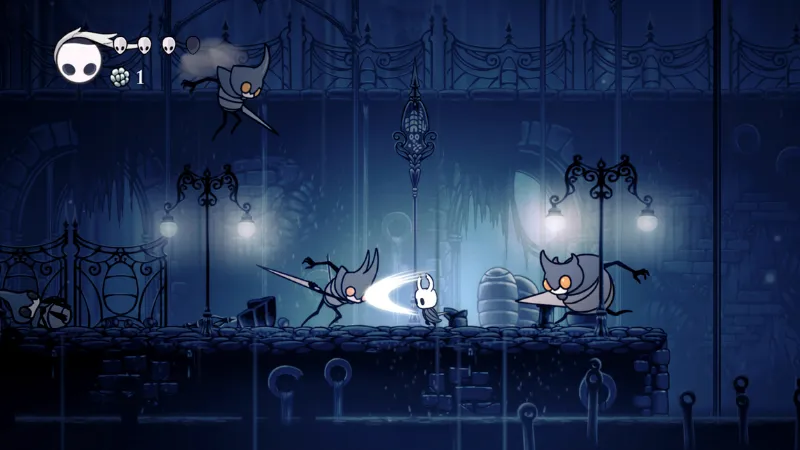
After years of minimal communication, Silksong reappeared during the June 2022 Xbox & Bethesda Games Showcase. The most significant takeaway was Microsoft’s confirmation that the game would be available within the next 12 months. For the first time, fans had a deadline: June 2023. This announcement was a double-edged sword. It revitalized the hype but also placed a massive spotlight on a team that historically thrived in the shadows of quiet iteration.
The 2022 trailer showed off even more ambitious features, including a "Silk-enhanced" movement suite that allowed Hornet to dash through the air with surgical precision. It became clear that Team Cherry wasn't just making a sequel; they were trying to create the definitive version of their vision. However, as the June 2023 deadline approached, the silence returned, leading to a predictable but heartbreaking delay announcement in May 2023.
The Perils of Perfectionism in a Three-Person Studio
Team Cherry consists of Ari Gibson, William Pellen, and Jack Vine. For a project of Silksong’s scale, this is an impossibly small headcount. The specific issue here is the "Perfectionist Loop." Because they are self-funded and have no publisher breathing down their necks, they have the luxury of time—but that luxury can become a prison. When a developer has total creative control, they can succumb to "just one more feature" syndrome.
Every time a new area is finished, the team might look at an old area and realize it no longer meets the new quality standard. In a larger studio, a producer would force the team to "lock" the content. In a tiny indie studio, the team simply goes back and redesigns the old area. This iterative cycle ensures high quality but makes a release date nearly impossible to predict.
The Content Density Problem
Hollow Knight was already massive, taking roughly 40 to 60 hours for a first playthrough. Reports from playtesters suggest that Silksong is significantly larger.
Reasons for the Expanded Scope:
- Unique Enemy AI: Over 150 new enemies with distinct behaviors.
- Soundscape Complexity: Christopher Larkin’s score has expanded to include more live orchestral elements.
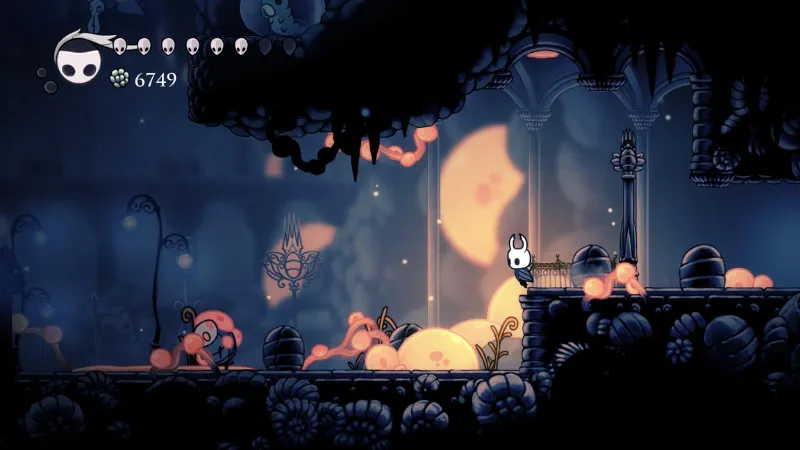
- Dynamic Environments: Interactive foliage and destructible elements that react to Hornet's silk.
The Weight of Community Expectation and "Meme-ification"
As the years passed, Silksong transitioned from a game to a cultural phenomenon—or rather, a cultural ghost. The "Where is Silksong?" meme became a staple of every major gaming event. While this keeps the game in the public eye, it creates a crushing level of expectation. The team isn't just competing with other games; they are competing with the idealized version of Silksong that has lived in fans' heads since 2019.
This pressure often leads developers to withdraw even further. If they post a small update, they are met with thousands of "Release date?" comments. If they stay silent, they are accused of abandoning the project. This specific social dynamic has forced Team Cherry into a defensive posture, where they only communicate through their marketing lead, Matthew Griffin, when absolutely necessary.
2024-2025: The Final Polishing Phase and Ratings Boards
By late 2024 and early 2025, signs of life began to emerge in the form of official ratings. The game appeared on the ESRB (North America), PEGI (Europe), and Australian Classification boards. In the world of game development, obtaining an age rating is a significant milestone—it usually implies that the game is content-complete and can be played from start to finish. This shifted the internal crisis from "What do we build?" to "How do we fix the bugs?"
The "Specific Issue" here is the sheer volume of "bugs" (pun intended) in a world this complex. Silksong’s gameplay is predicated on high-speed physics. Hornet’s ability to grapple, lunge, and counter-attack depends on frame-perfect interactions with the environment. In a kingdom as vertical as Pharloom, the potential for players to "break" the map or get stuck in geometry is exponentially higher than in the more boxy corridors of Hallownest.
The Technological Leap: Unity and Platform Parity
Another hurdle in the later years of development has been the evolution of the Unity engine and the shift in hardware. When Silksong was announced, the Nintendo Switch was the primary target. Since then, the PlayStation 5 and Xbox Series X/S have become the standard. Ensuring that Silksong runs at a flawless 60 or 120 FPS across all these platforms—while maintaining the intricate, hand-drawn art style—requires a massive technical lift.
Team Cherry has had to navigate several Unity engine updates, which often break existing code. For a small team, migrating a massive project to a newer version of an engine can take months of troubleshooting. This technical debt is often invisible to fans but represents a significant portion of the "missing" years in the development timeline.
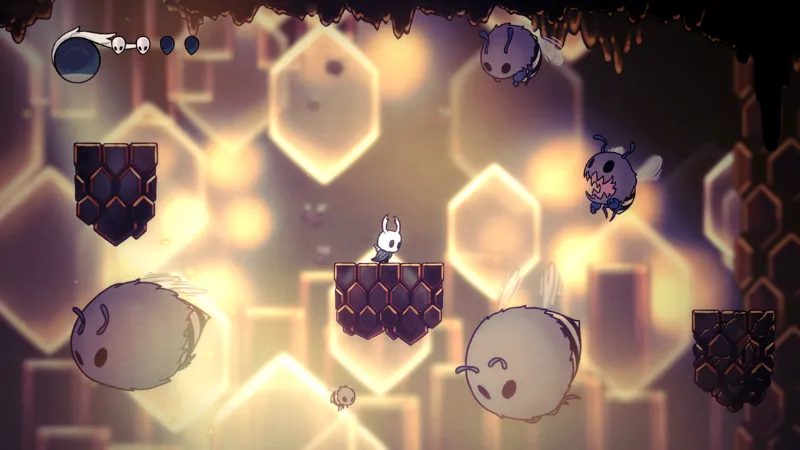
Conclusion: The Price of Indie Greatness
The story of Hollow Knight: Silksong is ultimately a story of ambition outstripping the reality of time. Team Cherry’s refusal to compromise on their vision has created a masterpiece in waiting, but it has also highlighted the fragile nature of indie development. When the "Specific Issue" of scope creep meets a "Perfectionist Loop," the result is a project that feels eternal. Yet, the history of gaming suggests that when these games finally arrive—like Cuphead or Owlboy before them—the years of waiting are often forgotten in the face of a singular, polished experience.
Pharloom represents a new frontier for the Metroidvania genre. Whether it releases tomorrow or two years from now, the legacy of Silksong is already written: it is the benchmark for what happens when creators choose art over convenience. For the fans, the wait is a trial; for Team Cherry, it is the price of immortality in the digital age.
Hollow Knight: Silksong’s development highlights the struggle of a tiny team balancing massive scope creep, perfectionism, and the weight of extreme expectations.