.webp) levelupreviewtop.com
levelupreviewtop.comThe Witcher 3: 10 Pro Tips for Mastering Gwent and Becoming a Card Champion
Introduction

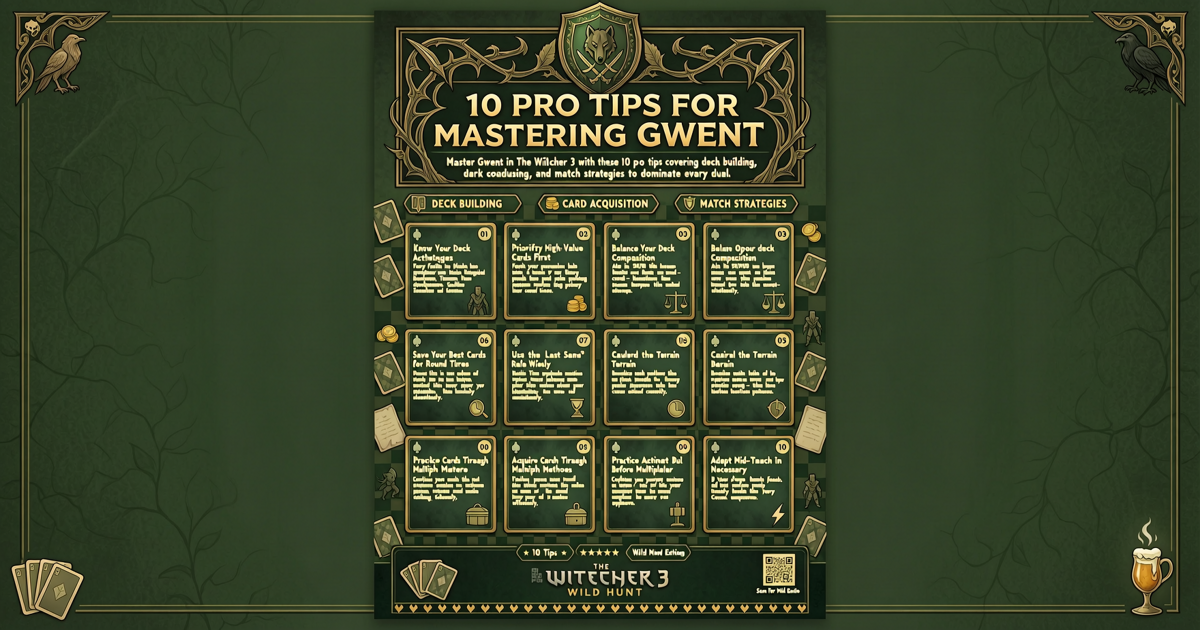
Gwent is more than just a minigame in The Witcher 3: Wild Hunt—it's a full-fledged card battle that can consume hours of your adventure. Whether you're a new player or looking to perfect your deck, these 10 pro tips will help you crush foes from the Innkeeper to the toughest nobles in Toussaint.
1. Always Carry a Spare Deck
Don't stick to one faction. Build at least two strong decks—one for Northern Realms (great for tight bonds) and one for Nilfgaard (powerful spy abilities). Switch based on your opponent's faction to counter their strengths.
2. Collect Every Card Early
Many cards are missable. Buy all cards from innkeepers, play every merchant, and save before challenging unique opponents like the Bloody Baron. Use the "A Miraculous Guide to Gwent" quest to track missing cards.
3. Master the Art of Spies
Spy cards are game-changers. They let you draw two cards while adding a weak unit to your opponent's side. Use them in the first round to thin your deck and force your enemy to waste strong cards. Nilfgaard and Northern Realms have the best spies.
4. Don't Be Afraid to Pass Early
Winning a round isn't everything. If your hand is weak or you've forced your opponent to use high-value cards, pass the first round even if you lose. Save your power for the next two rounds.
5. Decoys Are Your Best Friend
Decoy cards let you pick up a unit from the board and play it again. Use them to reuse medics (revive cards) or to steal enemy heroes with Dandelion or Villentretenmerth (the dragon). Place a decoy in every deck.
6. Prioritize Tight Bond Combos
Northern Realms' Tight Bond units (like Blue Stripes Commandos) double their power when multiple are played. Use Commander's Horn to double their strength again. Keep at least two of each in your deck for massive damage.
7. Weather Cards Are Situational
Biting Frost, Impenetrable Fog, and Torrential Rain can cripple enemy rows, but they also hurt your own if you have units there. Use them only when you have a clear advantage (e.g., opponent relies on melee units). Swap them out for Clear Weather if not needed.
8. Build a Skellige Deck for Late Game
Once you reach Skellige, collect the unique deck from the Gwent: Skellige Style quest. Skellige cards have Berserker and Mardroeme mechanics that transform into powerful units. This deck is excellent for surprise comebacks.
9. Manage Your Hand Size
Always aim to have 10 cards at the end of the first round (max is 10). Use leader abilities like Foltest's Lord Commander (destroy a row after playing) or Emhyr's Emperor of Nilfgaard (pick a card from opponent's discard) to control the flow.
10. Practice Against High Stakes Opponents
The toughest matches are at the Passiflora in Novigrad and the High Stakes Tournament in Toussaint. Save before these. Use a spy-heavy deck to outdraw opponents and always keep a scorch card (like Villentretenmerth) to wipe out their strongest units.
Conclusion
With these tips, you'll transform from a Gwent novice into a true champion. Remember to have fun, experiment with factions, and never underestimate the power of a well-timed spy. Now go forth and conquer the card tables of the Continent!