.webp) levelupreviewtop.com
levelupreviewtop.comGenshin Impact: The Stories You Almost Miss Are the Ones That Make Teyvat Feel Alive
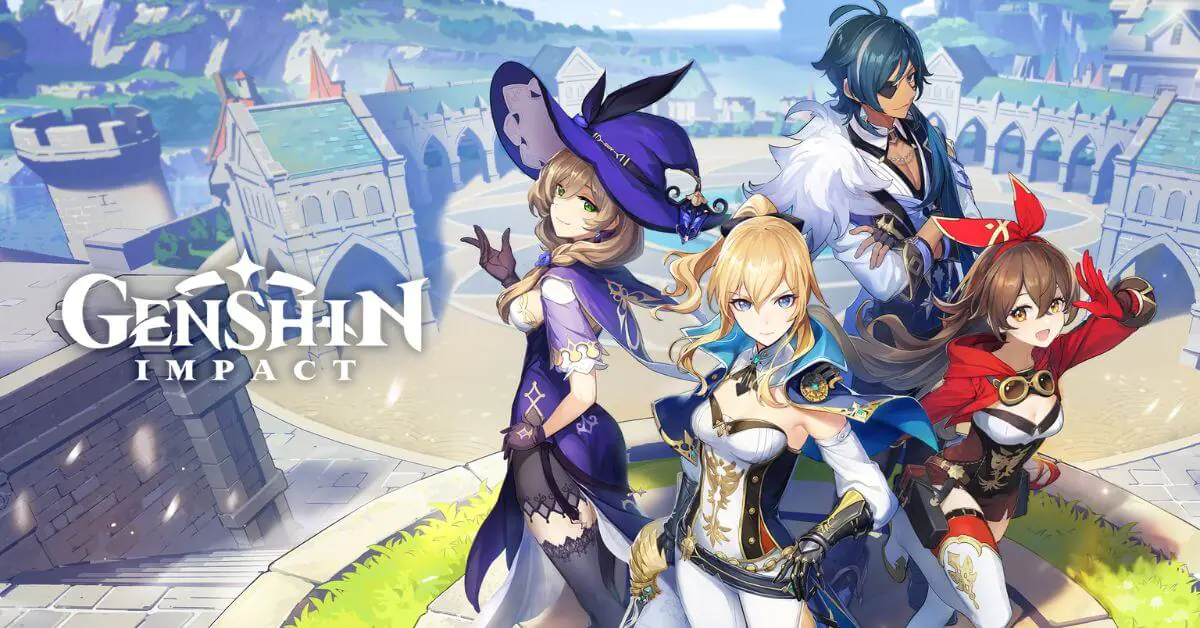
1. The World Beyond the Main Story
A game can give players an enormous world, hundreds of characters, and a central mystery powerful enough to carry an entire adventure. Yet none of those things automatically makes that world feel alive. A place can be visually impressive and still feel empty once the main objective disappears from the screen. Characters can have elaborate designs and dramatic introductions but leave little emotional impression after their quests are finished. What makes a fictional world memorable is often much smaller: a conversation that reveals something unexpected, a local problem that matters deeply to the people experiencing it, or a character whose life continues to feel meaningful even when the player has no immediate reason to visit them. This is one of the most interesting qualities of Genshin Impact. Beneath its large-scale narrative about the Traveler searching for their missing twin lies a collection of smaller stories about people trying to understand their place in Teyvat. These stories do not always involve gods, ancient civilizations, or threats capable of changing the world. Sometimes they concern a family disagreement, an unfinished promise, a person's ambitions, or the difficulty of moving forward after losing someone.
The distinction matters because the main storyline and the smaller stories serve different emotional purposes. The central narrative gives the Traveler a direction. It creates mysteries that encourage players to continue and introduces conflicts whose consequences may extend far beyond a single region. Smaller stories, however, give the world texture. They show what those larger events mean to the people who must continue living through them. A nation may be shaped by its Archon, its history, and its political struggles, but its identity also emerges from ordinary routines. People work, celebrate, argue, remember, and make decisions that rarely appear important from a distance. Their lives continue regardless of whether the Traveler is present to witness them. That is where Genshin Impact becomes especially compelling. Its world is not defined exclusively by the story the player is following. It is also shaped by stories the player can choose to notice.
The most meaningful experience may not always come from defeating a powerful enemy or reaching the next major revelation. It may come from completing a quest that initially appears unimportant, only to discover that its real subject is something familiar: regret, loneliness, loyalty, pride, or the fear of being forgotten. These moments make Teyvat feel less like a setting built around the Traveler and more like a world that existed before the journey began and will continue after the player leaves.
2. The Traveler Is a Visitor in Other People's Lives
The Traveler occupies an unusual position in Teyvat. They are central to the main narrative, yet they arrive in each region as an outsider. They do not share the local population's complete history, cultural assumptions, or personal relationships. They must learn how each place works while gradually discovering that its apparent identity is more complicated than its public image suggests.
This outsider perspective is useful for storytelling. It allows players to encounter a region without needing to understand everything about it beforehand. They can learn about local customs, conflicts, and beliefs through the people they meet. But the Traveler's position also creates an important limitation: they can witness other people's lives without ever fully becoming part of them. A character may share a deeply personal experience with the Traveler, but the relationship still exists within the boundaries of a larger journey. The Traveler moves between places, while the people they meet often remain tied to specific communities, responsibilities, and histories. Even when a quest concludes, the character's life cannot be reduced to the moment when the player receives a reward. This is particularly noticeable in quests that focus on ordinary people rather than major figures in the central conflict. A local resident may have no special power, no grand destiny, and no direct connection to the Traveler's search for their sibling. Their problem may not change the political balance of a nation or reveal a secret about the world's past.
Nevertheless, their experience can matter. The Traveler's role in these stories is often to help someone reach a point they could not reach alone. That might mean resolving a practical problem, uncovering information, or simply allowing a person's circumstances to become visible. The player enters the story as an outsider, participates in a brief moment of change, and then continues travelling.
There is something quietly affecting about this structure. It resembles the way people encounter one another in real life. A stranger may enter our lives during a particular period, help us through a difficult situation, and disappear before we understand the full significance of the encounter. We rarely become permanent figures in every person's story, but our temporary presence can still matter.
Genshin Impact repeatedly creates this feeling through its smaller quests. The Traveler is important, but they are not always the emotional center of the story. Sometimes the real subject is someone else's decision, someone else's loss, or someone else's attempt to find a way forward.
This changes how the player can understand progress. Completing a quest does not necessarily mean that the Traveler has solved a problem for the entire world. It may mean that one person has gained a little clarity, one family has found a way to continue, or one forgotten experience has finally been acknowledged. Those are modest outcomes compared with the scale of the main narrative. They are also part of what makes the world believable.
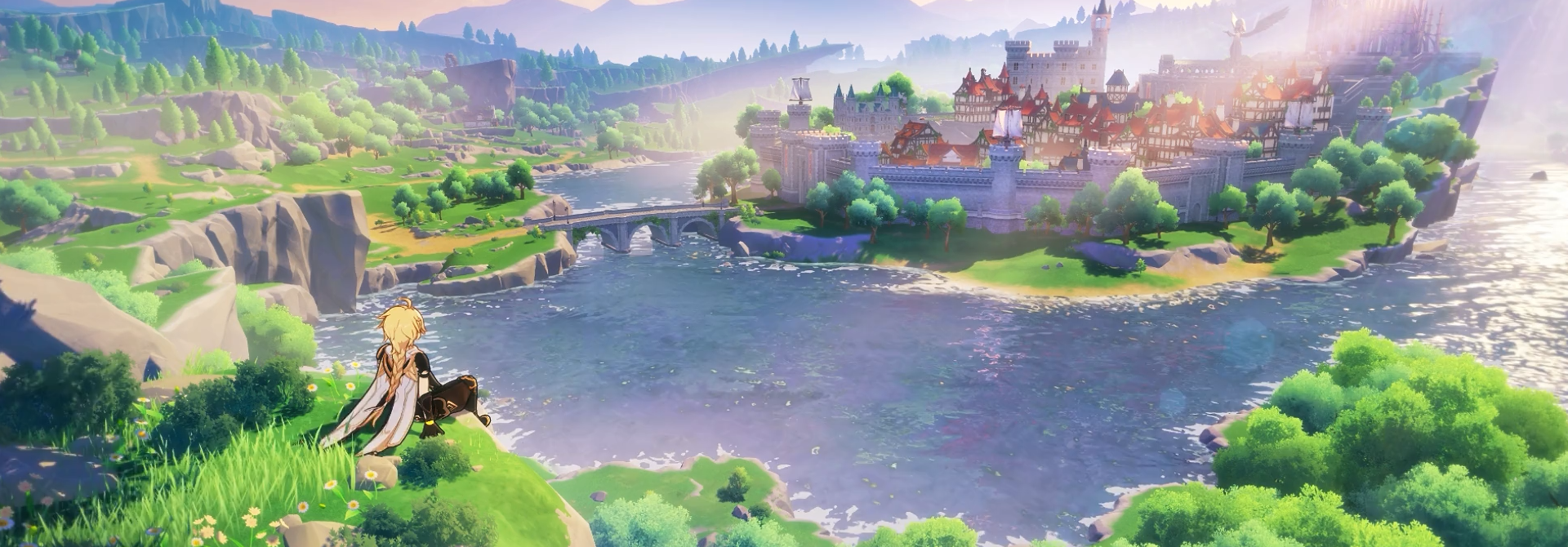
3. World Quests Give Ordinary People a Place in Teyvat
The Archon Quests provide the broad framework for the Traveler's journey, but World Quests often reveal the daily realities beneath that framework. They take players away from the most visible figures and place them among people whose concerns might otherwise remain outside the central story.
These quests can introduce local traditions, forgotten histories, unusual mysteries, or conflicts that have developed far from the political center of a region. Their scale varies considerably, but their narrative value often comes from how they connect a specific place with the people who inhabit it.
A ruined structure is more interesting when it once served a community. An isolated settlement becomes more meaningful when its inhabitants have reasons to remain there. A strange local custom gains emotional significance when the player learns what it means to the people who practice it.
The environment begins to carry human context.
This is important because visual design alone cannot communicate everything about a place. Beautiful architecture can establish a region's identity, but the stories attached to that architecture help explain how people experience it. A grand building might represent power to one person and painful memories to another. A remote landscape might be a dangerous obstacle to a traveller but a familiar home to someone who has lived there for years.
World Quests allow these different perspectives to coexist.
They also encourage a different pace of play. The main storyline often creates a clear sense of urgency, even when the player is free to explore. A World Quest can redirect attention toward a local mystery that has no obvious connection to the Traveler's larger objective. Following it becomes an act of curiosity rather than a necessary step toward the central conclusion.
That freedom gives these stories room to surprise the player.
Some of the most effective World Quests are those that begin with an apparently simple request and gradually reveal a more complicated situation. The initial objective becomes less important as the player learns why it matters. A task that seemed routine can uncover a history of conflict, an old misunderstanding, or a personal sacrifice that has remained hidden.
The emotional effect comes from discovering that the situation was larger than it first appeared, even if it remains small in the context of the entire world.
These quests remind players that Teyvat contains many forms of significance. Not every story needs to threaten a nation to deserve attention. Not every character needs to become a major figure in the Traveler's life to leave an impression.
Sometimes, a small story is powerful precisely because it does not pretend to be anything more than the life of one person.
4. The Past Is Never Completely Gone
One recurring source of emotional depth in Genshin Impact is the relationship between the present and the past. Teyvat is filled with traces of earlier lives: old ruins, forgotten records, abandoned settlements, inherited traditions, and characters who continue to make decisions based on events they may never fully understand.
History is not simply information waiting to be discovered. It influences what people believe, whom they trust, and what they think they owe to others.
A character might preserve a tradition because it connects them to their ancestors. Another might reject the past because its legacy has caused suffering. Someone else may spend years searching for an explanation that no longer exists in a complete or reliable form.
These different responses make history feel personal.
When a quest reveals something about an ancient civilization or a forgotten event, the discovery can change the player's understanding of a location. But its emotional significance often depends on the people who continue to live with the consequences. The past becomes meaningful when it explains why someone behaves as they do in the present.
This is also why the game's mysteries can have an emotional effect beyond the satisfaction of solving a puzzle. Learning what happened is not always the same as fixing what happened. A forgotten truth may explain a tragedy without undoing it. Recovering a lost record may restore someone's knowledge of their history without returning what they have lost.
The player can discover the truth, but discovery does not guarantee restoration.
That distinction gives some of Teyvat's stories their melancholy quality. The world contains many remnants of lives that cannot be recovered. The Traveler can investigate them, interpret what remains, and sometimes help others understand their significance. Yet the people who originally created those memories may be long gone.
There is a difference between remembering someone and bringing them back. The game often finds its emotional power in that gap.
This theme also connects with the Traveler's own journey. Their search for their sibling is driven by the belief that understanding what happened will reveal what must happen next. Every new piece of information matters because it brings them closer to a personal truth. But the world repeatedly demonstrates that knowledge can complicate a journey rather than simplify it.
The more the Traveler learns, the more they must consider the perspectives and histories of people whose experiences do not necessarily align with their own goals.
In this way, Teyvat's past becomes more than background lore. It becomes an active force that shapes the present, sometimes offering guidance and sometimes creating burdens that the living must decide how to carry.
5. Character Stories Work Best When They Reveal Contradictions
A character can have a memorable design, a distinctive combat style, and a personality that is immediately appealing. Those qualities may encourage players to become interested in them, but lasting attachment often requires something more: a sense that the character has an inner life that cannot be understood from a first impression.
Genshin Impact frequently builds this depth by presenting characters through contrasts.
A confident person may be hiding uncertainty. Someone who seems carefree may be carrying responsibilities they rarely discuss. A figure admired by others may feel trapped by the expectations attached to that admiration. A character who appears distant may care deeply but struggle to express it in a way other people recognize.
These contradictions make characters feel more human because people rarely behave according to one simple defining trait.
The strongest character stories do not merely explain why someone is impressive. They reveal what that person struggles to reconcile within themselves.
A character's public identity might be shaped by their occupation, status, family, or reputation. Yet their private concerns may have little to do with the image others see. The gap between those two versions of the person creates opportunities for conflict, especially when maintaining the public image requires them to suppress their private needs.
When a story explores that gap, the character becomes more than a collection of attractive qualities.
The player begins to understand why they make particular choices, why they avoid certain conversations, and why apparently simple situations can become emotionally difficult. Their actions acquire context without becoming completely predictable.
This is where Story Quests can be particularly effective. By narrowing the focus to one character, they create space for details that would be difficult to develop during a larger national conflict. The narrative can slow down, follow a more personal problem, and allow the character's own priorities to determine what happens next. HoYoverse has also used character-focused Hangout Events to explore personal interactions through different story paths.

The value of these stories is not that they reveal every secret. It is that they allow the player to see a familiar character from a different angle.
A character may remain mysterious after their story concludes, but the mystery feels different once the player understands something about their fears or desires. Instead of being an attractive figure whose personality is defined by a few memorable lines, they become someone whose choices can be interpreted in several ways.
That complexity gives players reasons to remember them beyond their role in combat.
6. Friendship in Teyvat Is Often Built Through Small Acts
Large emotional declarations have an obvious place in storytelling. A character who finally admits the truth, confronts a painful memory, or expresses gratitude after a difficult journey can create a powerful scene. But relationships rarely become convincing through dramatic moments alone.
They need smaller acts that establish trust.
In Genshin Impact, friendship is often expressed through practical assistance, shared experiences, and the willingness to pay attention to another person's concerns. The Traveler may help a character complete a task, accompany them through an unfamiliar situation, or learn why something that seems unimportant to others matters so much to them.
The action itself may be ordinary. Its meaning comes from the attention behind it.
This is a useful storytelling choice because it allows relationships to develop without requiring every interaction to become a major emotional turning point. Characters can grow closer through conversations that reveal their habits, preferences, and ways of thinking. The player gradually learns what makes them laugh, what unsettles them, and what they may be reluctant to admit.
Over time, familiarity becomes a form of attachment.
The same principle applies to the player's relationship with the world. When players spend enough time helping people in a region, that place can begin to feel familiar for reasons that have little to do with its geography. A town becomes memorable because of the people encountered there. A location acquires emotional significance because the player remembers what happened during a particular quest.
The map is no longer just a collection of destinations. It becomes a record of experiences.
There is also a subtle difference between helping someone and understanding them. A task can be completed without the player fully understanding the person who requested it. A more effective story uses the task as a way to reveal the person's circumstances, allowing the player to see beyond the immediate objective.
That process mirrors real relationships. We often learn about others through what they ask of us, what they avoid, and how they respond when circumstances become difficult. Their personalities emerge through behavior rather than explanation alone.
The best small stories in Genshin Impact recognize this. They make the player participate in a situation before revealing why it matters, allowing emotional understanding to develop alongside practical involvement.
The result is a form of connection that feels earned rather than announced.
7. The Different Nations Tell Different Kinds of Human Stories
Teyvat's regions have distinct identities, but their differences become most interesting when they influence the way people understand their lives.
Mondstadt is associated with freedom, yet freedom can raise questions about responsibility, belonging, and what people owe to one another. Liyue's traditions and commercial life create a setting where contracts, obligations, and the value of human effort can become central to personal decisions. Inazuma's relationship with eternity invites questions about change, loss, and the consequences of trying to preserve a familiar world.
Other regions introduce their own combinations of culture, institutions, beliefs, and social tensions. The specific conflicts differ, but the underlying questions often remain recognizable.
What should a person preserve when the world changes? When does tradition offer stability, and when does it prevent people from moving forward? How much should an individual sacrifice for a community? What happens when a system that once provided security begins to restrict the people living within it?
These questions give the regions thematic identities beyond their visual styles.
A region's environment and architecture establish its immediate atmosphere, but its stories show how people have adapted to living there. The same social structure can offer opportunities to one character while creating obstacles for another. A belief that provides comfort to one person may feel restrictive to someone whose experiences have led them to question it.
This variation prevents the world from becoming a collection of simple cultural labels.
It also gives the Traveler's journey a broader meaning. Moving between nations does not merely expose the player to new scenery and new combat challenges. It introduces different ways of organizing society and interpreting human responsibilities.
The Traveler cannot understand every region through the same assumptions. They must listen, observe, and adjust their understanding as they encounter people whose priorities differ from those they met earlier.
This makes travel a process of learning rather than just movement.
The world becomes richer because no single region contains the only valid answer to every problem. Different societies have developed different ways of responding to uncertainty, conflict, and change. Each approach has its own strengths, limitations, and consequences for the people who live within it.
The Traveler's outsider perspective allows players to compare these approaches without requiring every conflict to be resolved by a single universal rule.
Teyvat feels large not simply because its geography stretches across multiple nations, but because its inhabitants do not all think or live in the same way.
8. Why Not Every Story Needs a Happy Ending
One of the risks of a game built around quests and rewards is that every problem can begin to feel like a temporary obstacle. Someone needs help, the player completes the objective, and the world returns to a stable state. This structure is satisfying because it gives the player a clear sense of accomplishment, but it can also make emotional conflicts feel too easy to resolve.
The more memorable stories in Genshin Impact understand that some problems cannot be solved completely.
A character may gain an explanation without recovering what they lost. Someone may find the courage to continue without discovering a perfect future. A misunderstanding may finally be addressed, even though the time spent living with it cannot be returned.
These endings can be meaningful because resolution does not always mean restoration.
Consider the difference between repairing a broken relationship and understanding why it broke. The first outcome may not always be possible. The second can still change how a person understands themselves and others. Knowing the truth may help someone stop blaming themselves, recognize another person's limitations, or accept that the past cannot be rewritten.
A story that allows this kind of outcome feels more respectful of its characters. It does not treat emotional pain as a puzzle that can always be solved through enough effort.
This does not mean every quest needs to end in tragedy. Constant sadness would become as predictable as constant happiness. What matters is the willingness to let outcomes reflect the circumstances and personalities involved, rather than forcing every narrative toward the same emotional destination.
Some characters need encouragement. Others need to make a difficult decision. Some stories are about reconciliation, while others are about accepting that reconciliation may never happen.
A world containing all these possibilities feels more convincing than one where every conflict produces an equally neat conclusion.
There is also a particular kind of satisfaction in helping someone reach an imperfect but meaningful outcome. The player may not be able to repair everything, yet their involvement has made a difference. A character who was confused may now understand their situation. Someone who felt isolated may discover that another person has been paying attention.
These changes may be difficult to measure, but they are still changes.
For a game as large as Genshin Impact, this approach helps prevent its stories from blending into a continuous sequence of objectives. The player can remember a quest not because it offered the most dramatic battle, but because its ending left an emotional question unresolved.
Sometimes, a story stays with us precisely because it does not tell us exactly how we should feel about what happened.
9. The Player Becomes a Keeper of Small Memories
There is a difference between remembering a game as a list of accomplishments and remembering it as a collection of experiences.
The first kind of memory is easy to organize. A player remembers which bosses they defeated, which regions they unlocked, which characters they obtained, and which major story chapters they completed. These milestones provide a clear record of progress.
The second kind of memory is more personal.
A player might remember an unexpected conversation, a quest that became more emotional than anticipated, or a character whose circumstances felt familiar. They might remember returning to a place because it reminded them of something that happened there. These memories are difficult to measure through conventional progression systems, yet they often contribute more to the emotional relationship a player develops with a game.

Genshin Impact creates opportunities for both kinds of memory.
Its large-scale progression gives players concrete goals, while its smaller stories allow those goals to become associated with personal experiences. A region can be remembered for its major narrative events, but it can also be remembered for a quiet quest that gave the place a different meaning.
This is particularly important in a game that players may return to over a long period. As new content expands the world, the player's understanding of earlier places and characters can change. A location that once seemed unfamiliar may become associated with several different experiences. A character introduced during one chapter may acquire new significance as the player's knowledge of the world grows.
The world becomes layered with memory.
Even the act of revisiting a familiar area can feel different after the player has learned more about its inhabitants or history. The physical location may remain recognizable, but the player now carries additional context. They know something about what happened there, what someone was trying to accomplish, or why a particular place mattered.
In this sense, the player does not merely move through Teyvat. They accumulate a personal interpretation of it.
That interpretation will differ from one player to another. Someone who focuses on the central narrative may remember the world through its major revelations. Another player may be more attached to particular characters, regional stories, or moments of unexpected humor. A player who spends more time on optional quests may develop a different emotional map of the world from someone who concentrates on progression.
None of these experiences needs to be identical for the world to feel meaningful.
The most successful fictional worlds allow players to form their own associations without requiring every memory to be part of the official central narrative.
10. The Stories That Remain After the Quest Is Finished
When a quest ends, its immediate objectives disappear. The player receives whatever rewards the game provides, the quest log changes, and attention moves toward something else.
But the emotional meaning of a story does not necessarily end with its final objective.
A character's decision may change how the player understands them. A discovery may alter the way a region is perceived. A small interaction may reveal a quality that makes a familiar person feel more complex. These impressions can remain even after the player has moved on to a different task.
That is the quiet achievement of Genshin Impact's smaller narratives. They give the world emotional continuity.
The main storyline encourages players to ask what will happen next. The smaller stories often encourage a different question: what has already happened here, and how are people still living with it?
That shift in attention makes a substantial difference. Instead of treating the world as a route between major objectives, the player begins to notice that every place contains experiences that exist independently of their own journey.
The Traveler may be searching for their sibling, but the people they meet are dealing with their own unfinished stories. Their concerns do not become meaningless simply because they are not the central priority of the main narrative.
Some are trying to preserve a tradition. Others are struggling to understand a loss, pursue an ambition, or decide what kind of person they want to become. Their lives continue within the same world, shaped by events that may never intersect directly with the Traveler's larger purpose.
This gives Teyvat a sense of life beyond the player.
It also offers a useful reminder about storytelling itself. A world does not become memorable simply by containing more information. It becomes memorable when that information gives meaning to places, decisions, and relationships. The player needs reasons to care about what they discover, not merely more things to discover.
The most effective small stories provide those reasons. They connect the world's history to individual experiences and allow ordinary concerns to exist alongside extraordinary events.
Their scale may be limited, but their contribution to the world is considerable.
Conclusion: Teyvat Is More Than the Journey We Were Sent to Complete
Genshin Impact gives the Traveler a clear purpose: find their missing sibling and uncover the truth behind the world they have entered. That central objective provides direction across a vast and continually developing setting. It encourages players to travel, investigate, meet new characters, and follow the mysteries that connect the different nations of Teyvat. But the world's lasting appeal comes from more than the questions at the center of the main plot. Its smaller stories reveal the people who live beyond that plot. World Quests introduce local histories and personal struggles. Character stories expose the contradictions behind familiar personalities. Quiet conversations and imperfect resolutions give emotional meaning to places that might otherwise be remembered only for their appearance or gameplay. Together, these experiences create a world that feels larger than the Traveler's immediate purpose.